
Blog · Hardscaping
Choosing TheRight Gravel.
Which type of rock to use for paths, bases, drainage and driveways, and how much to order.
Not All Gravel Is The Same
Gravel is sold under a lot of names, and using the wrong type is a common reason paths get muddy, bases settle and drainage fails. The two things that matter most are the shape of the stones, angular or rounded, and whether the rock includes fines, the small dust-sized particles that let it pack down.
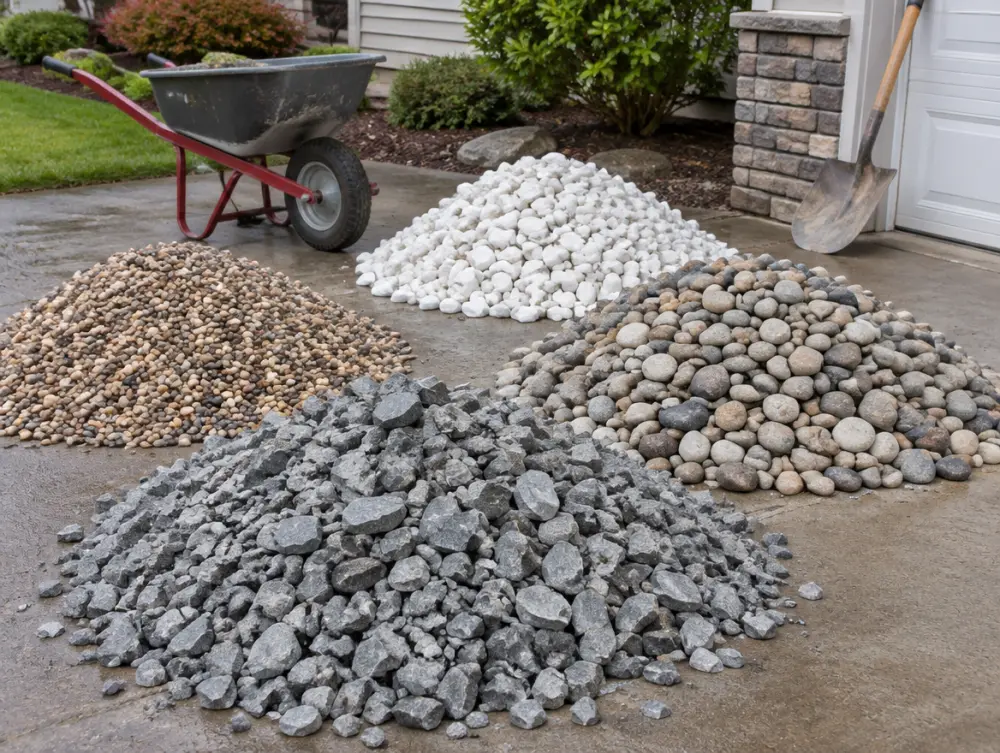
Common Types And Where They Work
Matching Gravel To The Job
- Under pavers or a patio: compacted crushed rock with fines, then a bedding layer.
- A gravel path you walk on: crushed rock that packs down, or stepping stones set in decorative gravel with edging to hold it in place.
- Behind a retaining wall: drain rock and a perforated pipe; see our retaining wall guide.
- A driveway or parking pad: a thick compacted base with a durable crushed-rock surface.
How Much To Order
Gravel is usually sold by the cubic yard. Measure the length and width of the area in feet, multiply by the depth in feet (3 inches is 0.25 feet), and divide by 27. A 10 by 20 foot area at 3 inches deep is about 1.9 cubic yards. Order a little extra for compaction and uneven ground.
Delivered Or Installed
We deliver gravel for your own projects, and we install it as part of paver patios, paths and retaining walls. See our hardscaping services. If you are clearing an overgrown area first, our yard cleanup service can get it ready.
Common Questions
What Gravel Is Best For A Paver Base?
Crushed rock with fines (often sold as a minus size, like 3/4-minus) is the standard base. The angular pieces and fine material lock together when compacted. Rounded gravel does not compact and should not be used as a base.
What Is The Difference Between Crushed Rock And Drain Rock?
Crushed rock with fines compacts into a firm surface. Drain rock is washed and has no fines, so water flows through it freely; it is used behind retaining walls and in drainage, not as a compacted base.
Is Pea Gravel Good For Walkways?
Pea gravel is comfortable and attractive, but its round stones roll underfoot and migrate. It works best with solid edging, or with pavers or stepping stones set into it.
How Do I Figure Out How Much Gravel I Need?
Multiply the length by the width by the depth in feet, then divide by 27 to get cubic yards. Add a little extra for compaction and uneven ground, or send us the measurements and we will work it out.
Need Gravel Or A Path?
Tell us what the gravel is for and the size of the area, and we will help with the type and quantity.