
Blog · Hardscaping
Pavers Vs.Concrete.
How the two most common patio surfaces compare in a wet Northwest yard.
Two Common Choices
When homeowners plan a patio, the decision usually comes down to pavers or poured concrete. Both can look good on day one. The difference shows up after a few Portland winters, when rain, clay soil and the occasional freeze start working on them.
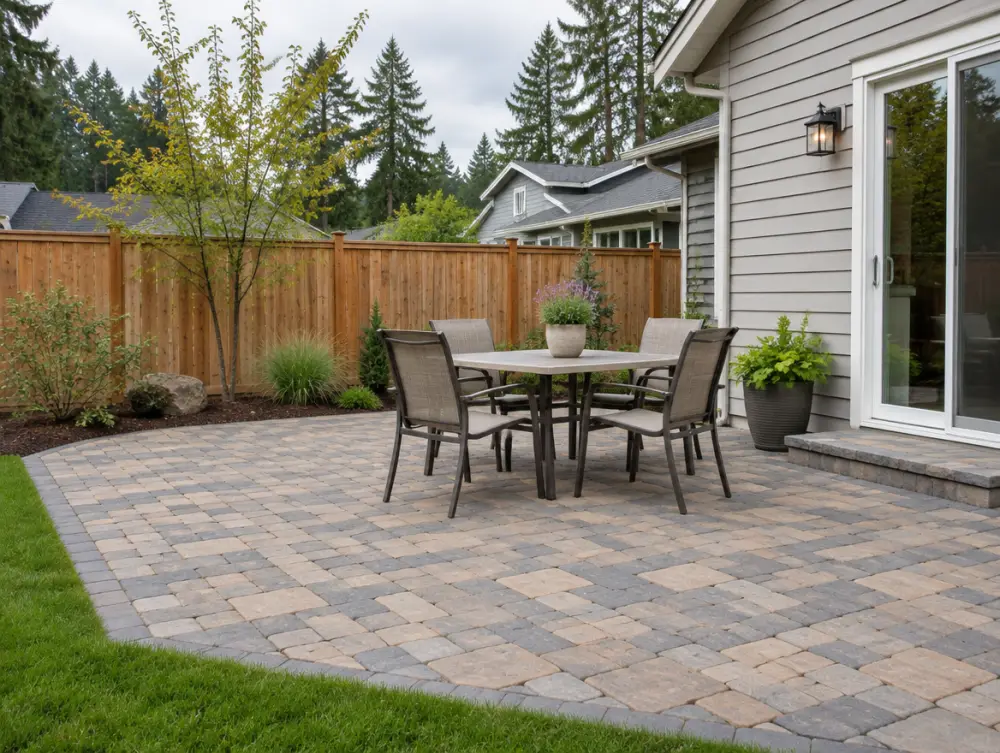
Side By Side
Why Pavers Hold Up In The Northwest
Portland soils tend to be clay that swells when wet and shrinks when dry, and the ground stays saturated for months. A concrete slab is rigid, so when the soil underneath moves, the slab cracks. A paver patio sits on a compacted crushed-rock base, and the joints between pavers let the surface flex slightly instead of breaking.
That only works if the base is built right. A paver patio on a thin or poorly compacted base will settle just as badly as cheap concrete. Read how we build paver patios, starting with the base.
When Concrete Still Makes Sense
- Large, simple areas where budget matters more than appearance
- Utility areas like a pad for trash bins or a shed
- Where it needs to match existing concrete next to it
For a patio you will live on, a walkway people see from the street, or anywhere you want a finished look, pavers are usually the better long-term choice.
Replacing An Old Concrete Patio
If you already have a cracked or sunken concrete patio, the usual path is to remove it, fix the base, and build new. We handle concrete removal and paver installation as one job. Keeping pavers clean later is simple; see paver patio maintenance and our pressure washing service.
Common Questions
Are Pavers Better Than Concrete?
For most patios and walkways, pavers hold up better over time because individual units can move slightly and be lifted and reset. Concrete is a single slab, so when it cracks or settles, the damage is permanent unless the slab is replaced.
Do Pavers Cost More Than Concrete?
Pavers usually cost more to install than a plain concrete slab. The difference narrows against stamped or decorative concrete, and pavers are much cheaper to repair later because only the affected area is reset.
Will Pavers Get Weeds?
Weeds and moss can grow in the joints, especially in shade. Properly installed joint sand and occasional cleaning keep this under control.
Can Pavers Go Over An Old Concrete Patio?
Sometimes, but cracked or settling concrete passes its problems to whatever goes on top. In most cases the old slab is removed and a proper base is built.
Planning A Patio?
Send a photo of the area and the rough size, and tell us how you want to use it.