
Blog · Handyman Services
TV Mounting &Smart Home Setup.
More involved than it looks once cables, studs, and devices are all part of it.
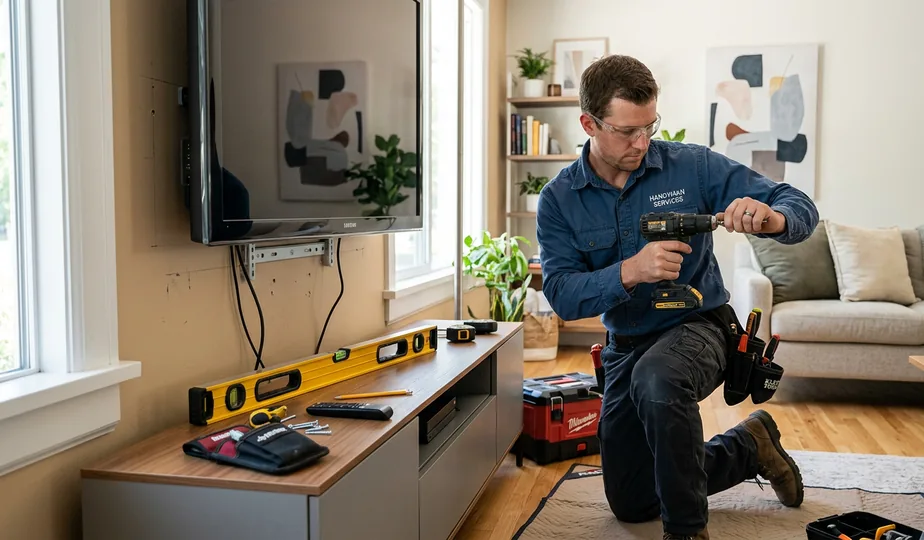
Mounting a TV looks simple in a store display — screen goes on wall, done. In an actual house, it involves finding real structural support, running or hiding cables, and increasingly, pairing the TV with smart home devices that need their own setup. A rushed job usually shows: a slightly crooked mount, visible cords running down the wall, or a TV that’s technically up but not actually level.
None of this is complicated for someone who does it regularly, but it’s easy to get wrong on a first attempt, especially with heavier TVs and older walls.
What’s Actually Involved
Why This Isn’t Always A DIY Job
The risk isn’t just cosmetic. A TV mounted into drywall alone, without hitting a stud, can pull loose over time — and with larger, heavier TVs, that’s a real safety issue, not just an inconvenience. Finding studs in the exact spot you need them isn’t always straightforward, especially in older homes with less predictable framing.
Smart home integration adds another layer — getting a soundbar, streaming box, and TV all talking to each other correctly sometimes takes more troubleshooting than the mounting itself. Having someone handle both at once means you’re not left with a mounted TV that still doesn’t quite work the way you wanted.
Cord Concealment Options
How cables get hidden depends on the wall and how much you want to invest in a clean look. Running cords through the wall itself, using an in-wall rated cable kit, gives the cleanest result with nothing visible at all, but it requires cutting into drywall and confirming there’s no wiring or plumbing in the way first. A surface-mounted cord cover is a simpler middle ground — paintable to match the wall, no cutting required, and still a big improvement over cables just hanging loose.
For rentals or situations where cutting into the wall isn’t an option, a cord cover channel is usually the better call, and it’s reversible if you move. Either way, the goal is the same: a wall that looks intentional, not like a TV that got hung in a hurry with cables left to dangle.
It's a small detail in the scope of a whole home, but it's the kind of small detail that’s noticeable every time you walk into the room.
A quick conversation upfront about exactly what you want covers most of this before it becomes a surprise later.
Ready To Get It Mounted Right?
Tell us what you’re working with, and we’ll handle the mounting and setup.