
Blog · Pressure Washing
Driveway &Concrete Cleaning.
Why concrete turns green and slick in the Northwest, and how to clean it without damaging it.
Northwest Concrete Gets Slick
In the Portland area, concrete stays damp for much of the year. Driveways, walkways and patios, especially in shade or under trees, collect algae, moss and grime that turn them dark green or black. Beyond looking bad, that growth makes concrete slippery when wet.
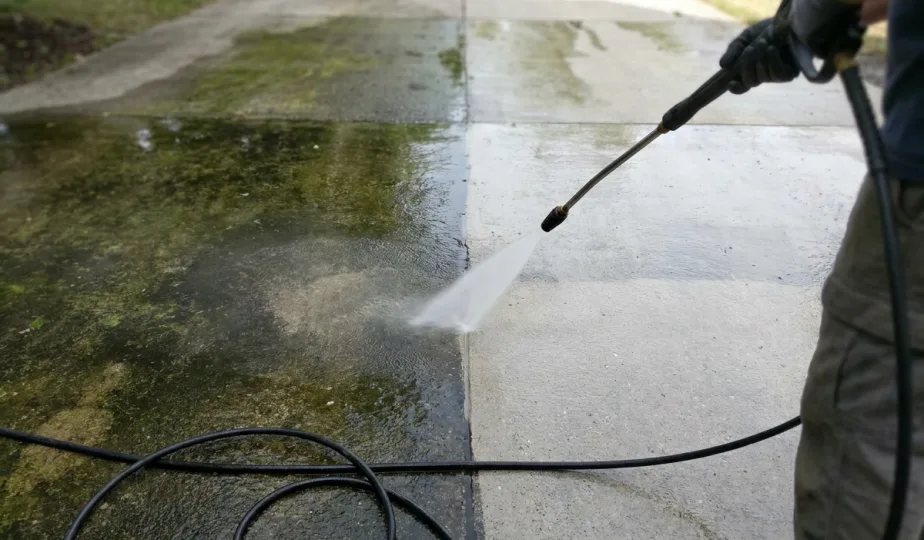
How Concrete Is Cleaned
What Comes Out, And What Might Not
- Usually removed: algae, moss, mildew, dirt and general grime
- Often lightened: fresh oil spots, rust, leaf stains
- May remain: old soaked-in oil, deep rust, and etching or wear in the concrete itself
Should You Seal It?
Sealing after cleaning can slow down staining and growth. Read should you seal it after pressure washing, and see how often to pressure wash in the Northwest and what pressure washing costs. Ready to book? See our pressure washing services.
Common Questions
Why Does My Driveway Turn Green?
Algae, moss and mildew grow on shaded, damp concrete. Portland’s long wet season, tree cover and north-facing slopes make it common, and it can make concrete slippery.
Can Pressure Washing Damage Concrete?
Yes, if done wrong. Too much pressure or a narrow nozzle held too close can etch the surface and leave stripes. A surface cleaner and the right pressure clean evenly without damage.
Will All Stains Come Out?
Algae, mildew and dirt usually come out well. Oil, rust and some tire marks can be lightened with pre-treatment but may not disappear completely, especially if they are old.
How Often Should Concrete Be Cleaned In Portland?
Most driveways and walkways benefit from a cleaning once a year, often in late spring or summer. Shaded areas that get slick may need it more often.
Ready For Clean Concrete?
Send a photo of your driveway, walkway or patio and the approximate size.