
Blog · Flooring
LVP Vs. LaminateVs. Hardwood.
How the three most popular floors compare, and which one fits each room of your home.
The Short Answer
For most Portland-area homes, LVP is the most practical all-around choice: it handles moisture, pets, and kids, and it works on every level of the house, including basements. Laminate gives a similar look for less in dry rooms like bedrooms and living areas. Hardwood is the choice when you want real wood that can be refinished for decades, as long as it stays out of wet rooms.
Here is how they compare in more detail, and which rooms each one suits best.
How They Compare
LVP (Luxury Vinyl Plank)
LVP is a vinyl plank with a printed wood-look layer and a protective wear layer on top. Most current products have a rigid, waterproof core, which is why LVP handles wet entries, kitchens, bathrooms, and basements well. It is comfortable underfoot, quieter with a good underlayment, and holds up to dogs, kids, and tenant turnover.
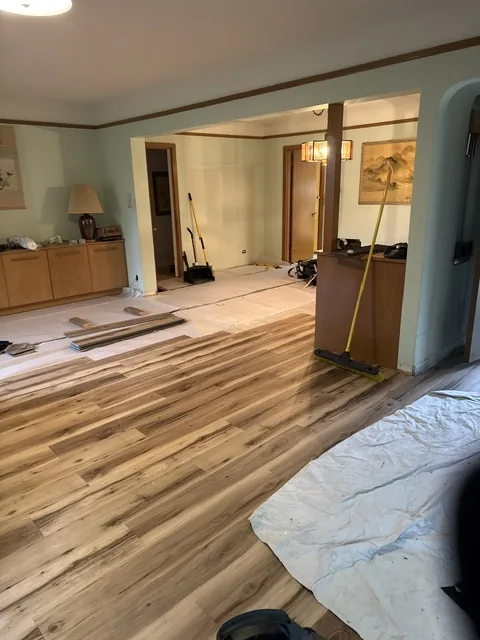
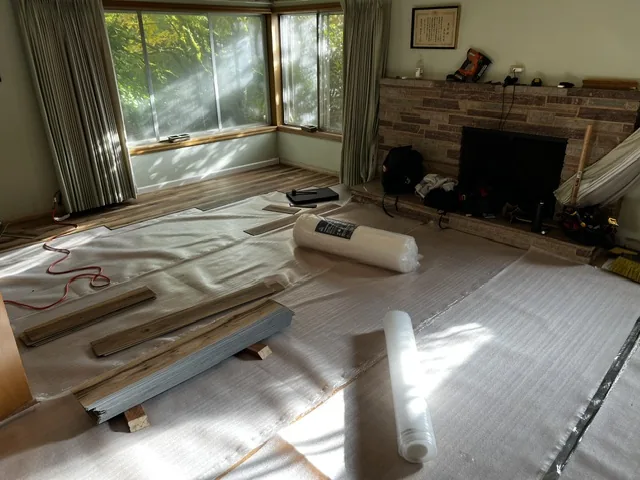
The thickness of the wear layer matters more than the thickness of the plank: it is what protects against scratches and scuffs. LVP can dent under very heavy point loads, so furniture pads help. It is the floor we install most often, including about 1,200 square feet on a current project in Hillsboro.
Laminate
Laminate has a wood-fiber core with a photographic layer and a hard, scratch-resistant top. It is often less expensive than LVP and resists scratches very well, which makes it a good fit for living rooms, bedrooms, and hallways.
Its weak point is water. If water sits on the seams, the core can swell, and swollen planks do not go back down. Newer water-resistant laminates are better, but in kitchens, bathrooms, laundry rooms, and basements, LVP or tile is usually the safer choice.
Hardwood And Engineered Wood
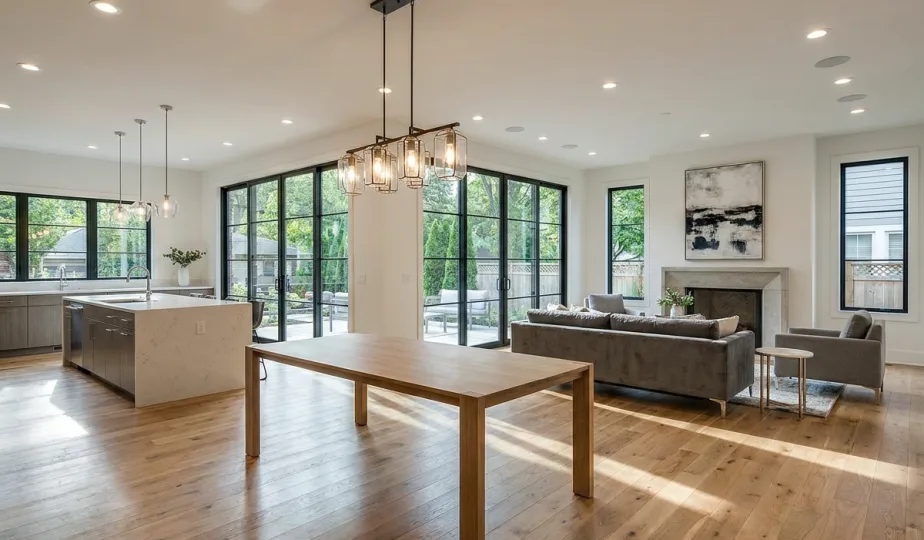
Solid hardwood is real wood all the way through. It is nailed down to a wood subfloor and can be sanded and refinished many times, so a well-kept hardwood floor can last for generations. It does not like moisture, so it is not a good fit for bathrooms, laundry rooms, or below-grade basements.
Engineered wood has a real wood top layer over a plywood-style core, which makes it more stable when humidity changes. It can be installed floating or nailed down, and depending on the thickness of the top layer, it can be refinished a limited number of times.
Which Floor For Which Room
Getting The Floor Installed Right
Whichever floor you choose, the result depends on what is underneath. We remove the old flooring, check the subfloor for soft spots, squeaks, and moisture, fix problems before the new floor goes down, and finish with matching transitions, stair nosing, and baseboards. See our flooring installation services, including install-only work if you already have your flooring.
Common Questions
Is LVP Waterproof?
Most LVP planks have a waterproof core, which is why LVP handles spills, wet entries, and kitchens so well. The installed floor is a different story: water can still get under the floor at the edges, at transitions, or through gaps if it sits for a long time. Proper installation, trim, and quick cleanup of standing water still matter.
Can LVP Go In A Basement?
Yes, LVP is one of the most common choices for basements because it handles moisture far better than wood or laminate. The concrete still needs to be flat and checked for moisture, and the right underlayment or vapor barrier makes a difference.
Can Hardwood Go In A Kitchen?
It can, and many homes have it, but it needs more care. Spills have to be wiped up quickly, and a dishwasher or sink leak can damage it. If you want a wood look with less worry, LVP or engineered wood are common alternatives.
Can I Buy The Flooring Myself?
Yes. We install flooring you have already purchased, or we can supply it. If you are buying your own, send us the product name and square footage first so we can confirm quantities, underlayment, and transitions.
Ready For New Floors?
Send your approximate square footage and a few photos, and we’ll help you pick the right floor.