
Blog · Remodeling
Shower Waterproofing,Explained.
Why the tile is not what keeps water out, and what to ask before a new shower is built.
Tile Is Not The Waterproof Part
Most people assume the tile keeps water out of a shower. It does not. Tile sheds most of the water, but grout is porous, and water gets through grout lines, corners and fixture openings every time the shower runs. What actually protects your walls and subfloor is the waterproof layer behind the tile.
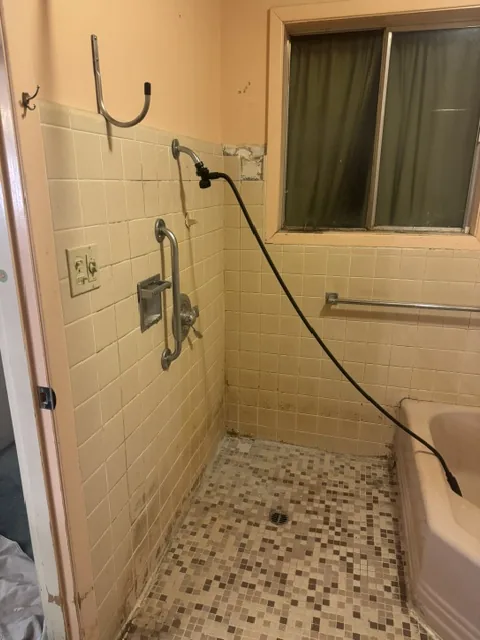
When that layer is missing, incomplete or failing, the damage stays hidden for years. It usually shows up as loose tile, cracked or dark grout, a soft spot in the floor, or a stain on the ceiling below. By then, the framing behind the shower can be rotted.
The Main Waterproofing Systems
Where Showers Usually Fail
Signs Your Shower Waterproofing Has Failed
- Grout that keeps cracking, crumbling or turning dark near the base of the shower
- Tiles that sound hollow when tapped, or that move
- A musty smell that cleaning does not fix
- Peeling paint, swelling trim or soft drywall outside the shower
- Stains on the ceiling below a second-floor bathroom
Our guide to water damage behind a shower covers these signs in more detail.
What This Means For Your Remodel
When you get bids for a tile shower, ask each contractor which waterproofing system they use and how they handle the drain, curb, niches and corners. A clear answer is a good sign. A bid that only mentions tile and backer board is worth asking about.
We build every tile shower on a complete waterproof system, using sheet membranes, liquid-applied membranes or a mortar-bed pan depending on the design. See our tile installation and bathroom remodeling services, or read about converting a tub to a walk-in shower.
Common Questions
Is Tile Waterproof On Its Own?
No. Porcelain and glazed ceramic tile shed water, but grout and the gaps around tile let moisture through every time the shower runs. The waterproof layer behind the tile is what protects the walls and floor.
What Is The Best Shower Waterproofing System?
There is no single best system. Sheet membranes, liquid-applied membranes and traditional mortar-bed pans all work when they are installed correctly and used as one complete system. The right choice depends on the shower design, the drain, and details like benches, niches and curbless entries.
Can You Waterproof Over Old Tile?
No. Waterproofing goes on the backer board or substrate, not over tile. When a shower has failed, the old tile and backer come out so the framing can be checked and a new waterproof layer installed.
How Long Should A Tile Shower Last?
A properly built tile shower can last for decades. Most early failures come from missing or poorly installed waterproofing, not from the tile itself.
Is A Flood Test Necessary?
A flood test, where the shower floor is plugged and filled with water before tile goes on, is a common way to confirm the pan does not leak. Ask your contractor how they check the waterproofing before tiling.
Planning A Tile Shower?
Send a few photos of your current shower and tell us what you have in mind.