
Blog · Flooring
Preparing ForNew Floors.
What to decide, what to clear out, and what to expect from the day the old floor comes up to the day the trim goes back on.
Good Prep Makes A Better Floor
Most of what makes a new floor last happens before the first plank goes down: the right product for each room, a flat and dry subfloor, and a clear space to work in. Some of that is the installer’s job and some of it is yours.
Here is how preparation usually breaks down on Portland-area flooring jobs, whether your contractor supplies the flooring or installs flooring you have already bought.
Decisions To Make Before Install Day
Still Choosing A Floor?
If you have not settled on a product yet, start with our comparison of LVP vs. laminate vs. hardwood for Portland homes. For bathrooms, see tile vs. LVP for a bathroom floor, and if the stairs are carpeted, our guide to replacing stair carpet with LVP or hardwood explains what that part of the job involves.
If You Bought The Flooring Yourself
We install customer-bought flooring regularly. A few steps make that go smoothly:
- Read the installation instructions in the box. Many products call for acclimating inside the home before installation, and some have specific underlayment or subfloor requirements. The manufacturer’s instructions are the rule to follow, and they can affect the product warranty.
- Store it indoors, not in a damp garage or shed, unless the instructions say otherwise.
- Check every box. Make sure all boxes are the same product and color. Open one or two to confirm it is what you ordered before install day, not during it.
- Ask about trim pieces. Matching transitions, stair nosing and end caps are easiest to buy at the same time as the flooring. If they are not available, tell your installer early.
Clearing The Rooms
- Furniture and rugs. Ask during the walkthrough whether moving furniture is part of the estimate. If it is not, plan to clear the rooms ahead of time.
- Closets. If closets are getting new flooring, empty the closet floors.
- Fragile items. Tear-out creates vibration and dust; take down anything delicate nearby.
- Appliances. A refrigerator, range or washer in a room getting new flooring has to come out. Agree in advance on who moves it and who handles water or gas connections.
- Interior doors. A new floor can be taller than the old one, so some doors may need to come off and be trimmed to swing freely.
- A clear path. Leave room in the driveway and a clear route through the house for materials coming in and old flooring going out.
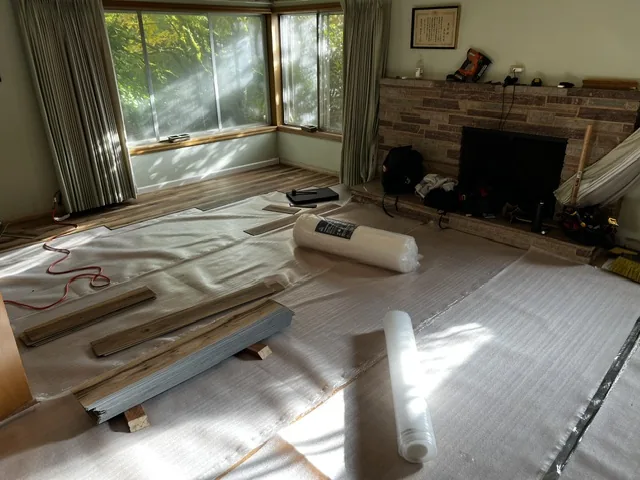
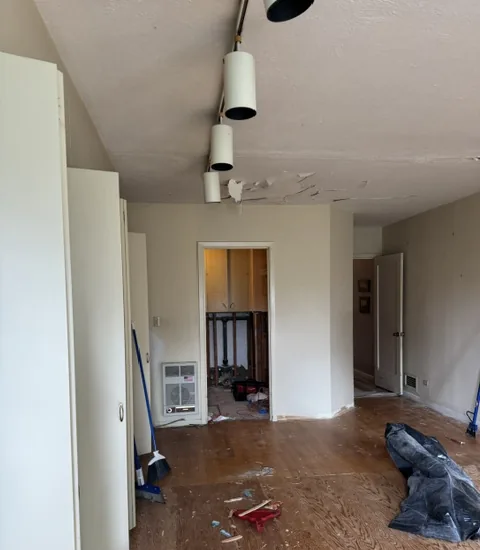
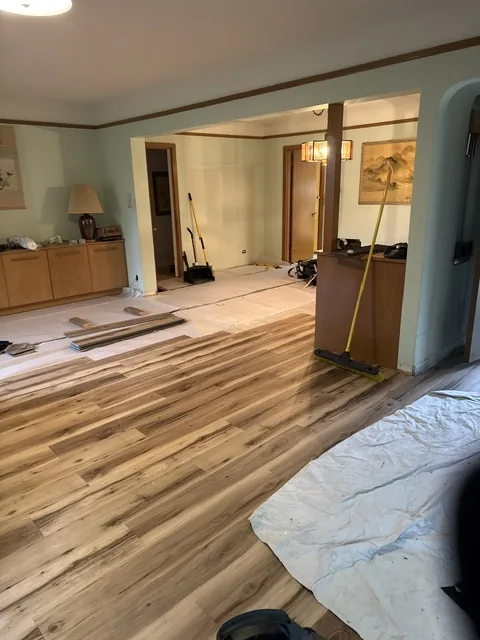
What Happens Under The Old Floor
Once the old flooring is up, the subfloor gets checked for soft spots, squeaks, uneven areas and moisture. Floating floors like LVP and laminate need a flat, sound base; problems left underneath tend to show up later as gaps, bounce or noise.
Sometimes the subfloor reveals more. On our Hillsboro bathroom and LVP project, removing the old flooring and opening the bathroom uncovered water damage. That was repaired, along with new plumbing and electrical, before roughly 1,200 square feet of LVP went down through the main living areas. When we find something like that, we show the homeowner and agree on the fix before installation continues. It is worth keeping some room in your budget for exactly this.
In older homes, some original flooring and adhesives should be checked before they are torn out. Our guide to asbestos surveys before a remodel explains what Oregon requires.
Install Day And After
Expect the rooms being worked on to be out of service while the old floor comes up and the new one goes in. Afterward, follow the manufacturer’s guidance on when furniture can go back, put felt pads under chair and table legs, and never drag appliances across the new surface. Keep a box of leftover planks or tiles; matching them years later can be hard, and a few spares make a damaged-board repair simple.
Our flooring installation work is licensed, bonded and insured under Oregon CCB #260830, and comes with a 1-year workmanship warranty on the installation.
Common Questions
Do I Need To Move My Own Furniture?
It depends on the estimate. Ask during the walkthrough so it is clear whether furniture moving is included, and plan to clear the rooms yourself if it is not. Small items, decor and closet contents are usually easiest for you to handle ahead of time.
Can You Install Flooring I Bought Myself?
Yes. We install flooring that homeowners buy as well as flooring we supply. Our 1-year workmanship warranty covers the installation; the product itself is covered by the manufacturer’s warranty, so follow its storage and acclimation instructions.
Can New Flooring Go Over The Old Floor?
Sometimes a floating floor can go over a flat, sound hard floor, but carpet has to come out, and added height at doors, transitions, stairs and appliances has to work. It is a call to make after looking at the existing floor.
What If Damage Is Found Under The Old Floor?
We show you what we found, explain the options, and agree on the repair before the new floor goes down. Covering a soft or damaged subfloor only moves the problem into your new floor.
Getting New Floors?
Send us the rooms, rough square footage and a few photos, and we’ll walk you through the next step.